
Building Your Dream Store: The Ultimate Retail Planning Guide
Your definitive roadmap to designing, merchandising, and marketing a retail environment that invites shoppers in and maximizes your revenue. Store Fixtures & Displays provides practical guidance to help you plan smarter from the very beginning.
Welcome to Store Fixtures & Displays!
Independent retail is the true heartbeat of any local community. Brick-and-mortar entrepreneurs are the powerful engines driving neighborhood commerce, providing jobs, and serving local needs. We want to start by congratulating you on the vital, exciting role your business plays in your own community!
Our team is deeply committed to the growth and success of independent retailers across every market. Whether you are cutting the ribbon on a brand-new location or breathing fresh life into an existing shop, Store Fixtures & Displays provides this comprehensive guidebook to equip you with the best practices, proven strategies, and creative ideas you need to thrive.
Inside this store-planning roadmap, you will discover expert advice on optimizing floor layouts, strategic fixture placement, high-converting merchandising techniques, marketing fundamentals, and detailed procurement checklists. Beyond this guide, our dedicated professionals are always on standby to brainstorm custom solutions tailored specifically to your unique footprint.
We supply a vast, comprehensive inventory of commercial fixtures, display hardware, and essential operational supplies – everything required to maximize your square footage and curate an unforgettable shopping experience.
PLAN FOR SUCCESS
Start with a Winning Strategy
An aesthetic, highly profitable store doesn’t happen by chance – it requires calculated planning. Before you purchase a single rack, it is crucial to clearly define your vision. Your answers to the following questions will directly inform which fixture solutions are right for you:
Who Is Your Target Demographic?
- Are your primary buyers men, women, or children? What is their average age and educational background?
- Consider their financial landscape: are they luxury spenders or bargain hunters?
- What do their daily routines and habits look like?
- Is your shop a destination they will drive miles to visit, or are they local foot traffic?
- What precise need or desire are you fulfilling the moment they walk inside?
What Is the Desired In-Store Experience?
- Think about the emotional response you want to trigger. If a customer texted a friend about your shop, what adjectives would they use?
- Ensure your physical environment matches your price tags. Premium merchandise requires a premium backdrop.
- How will you allocate your square footage? Decide the balance between browsable product displays and dedicated customer service areas.
How Will You Outshine Your Competition?
- Identify your core differentiator. Why should a shopper choose you over the business across the street?
- Are you providing exclusive inventory, highly personalized service, or bespoke product customization?
- Do some field research. Walk through competing shops in your industry to analyze what they do brilliantly and where their layouts fall short.
What Are Your Financial Parameters?
- Define your total project budget and divide it strategically between permanent architectural improvements and movable retail fixtures.
- If you are moving into a new space, negotiate with your landlord to see if a tenant improvement allowance is available.
- Are you dealing with a “vanilla shell” where you have total control over the walls and floors?
- Or are you inheriting an “as-is” floor plan that will require highly adaptable display systems?
Designing a Retail Entrance That Converts
Mastering the Entrance Experience
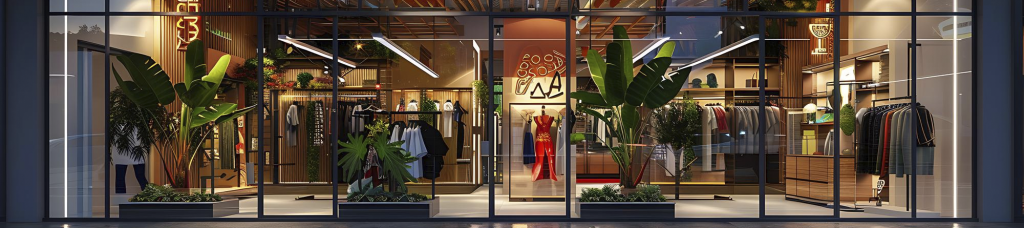
Your building’s exterior is your loudest piece of marketing. Crisp signage and engaging windows act as a magnet, while the initial step inside confirms the shopper made the right choice. Will they stick around to explore, or turn back to the street?
Make Your Signage Unmissable
Your main sign is a split-second communication of your brand. Keep these rules in mind to capture the attention of drivers and pedestrians:
- Scale It Correctly: The sign should be large enough to be easily read from the street, but appropriately balanced with the size of your facade.
- Maximize Contrast: The most legible signs utilize dark lettering against a stark, light background.
- Focus on Clarity: Choose bold, clean typography over intricate, hard-to-read scripts.
- Edit Your Words! Less text is always more effective.
Designing Windows That Stop Traffic
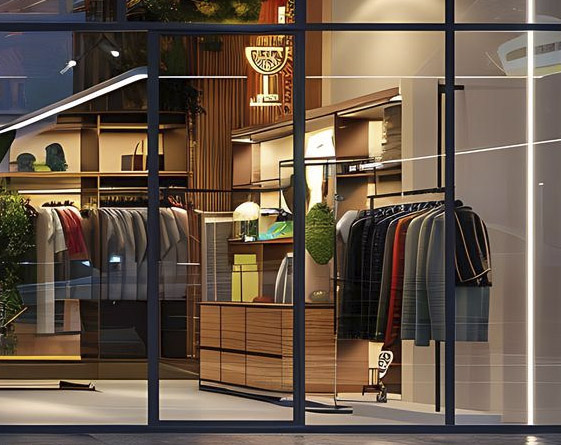
Treat your front windows like a 24/7 commercial. If the setup doesn’t spark curiosity, potential buyers will keep walking. Effective displays convert passersby into foot traffic.
- Take creative risks and make a bold statement.
- Utilize a cohesive color palette to tie the whole arrangement together.
- Give your products room to breathe – overcrowded windows look chaotic.
- Refresh your displays regularly so the store never feels stagnant to regular commuters.
- Look outside your specific industry for inspiration (think art galleries, pop culture, or nature).
Curating the Interior Ambiance
The second a customer crosses the threshold, they subconsciously evaluate your brand based on what they see, hear, and feel. Two major elements dictate this mood:
- Illumination: Lighting directs the eye. A warm, inviting general glow paired with strategic spotlights will make your highest-margin items irresistible.
- Audio: Your soundtrack controls the shopping pace. Relaxed tempos encourage lingering, while upbeat music injects energy into the space.

The 80/20 Approach to Store Colors
Even if you are working within a standard commercial box, you have immense control over the vibe. (While consulting a designer is great, keep these DIY fundamentals in mind):
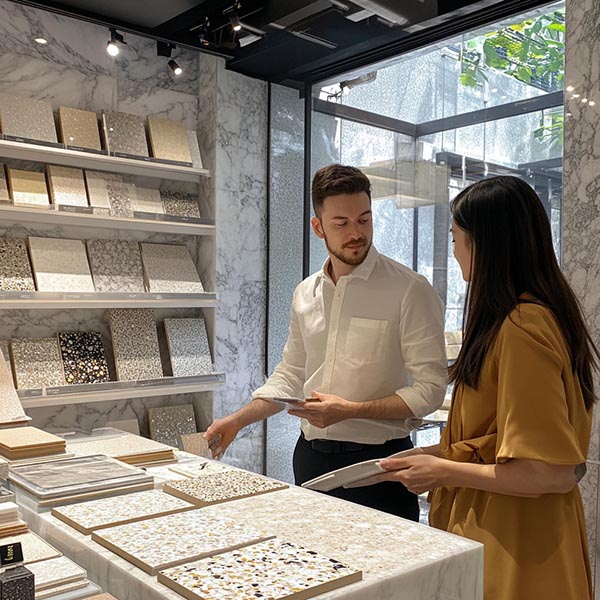
- Dedicate 80% of Your Space to Neutrals. This creates a timeless, versatile canvas that allows your merchandise to take center stage.
- Reserve 20% for Accent Shades. Deploy bright or branded colors purposefully to draw the eye toward key promotional zones.
Expert Advice: Walk your favorite local mall and analyze how top-tier brands use paint and textures to evoke specific feelings. Steal their best ideas and adapt them to your brand!
Getting the Lighting Right
- Collaborate closely with your electrician to guarantee a perfect mix of bright ambient light and focused display lighting.
- Pay attention to your bulbs’ Color Rendering Index (CRI). You want your inventory to look vibrant and color-accurate.
- Account for the sun. Notice how natural light and glare from the front windows will shift throughout the afternoon.
Choosing the Right Flooring
- Decide between the warmth of carpeting or the sleek durability of hard floors based on your store’s personality.
- Invest in commercial-grade materials. High foot traffic will destroy cheap residential flooring incredibly fast.
- Factor in the cost and effort of keeping the material clean daily.
- Prepare for the elements by placing high-quality, absorbent mats at the door to catch rain, snow, and mud.
- Stick to muted, neutral tones for maximum longevity.
Respecting the Transition Space
People need a moment to mentally shift gears when they enter a building. They are transitioning from the busy street and aren’t quite ready to buy yet.
- The initial 5 to 15 feet inside your door is the “Decompression Zone.”
- Because shoppers are still adjusting, they will likely ignore any merchandise placed immediately at the entrance.
- Keep this area wide open and clutter-free so they have a welcoming, unobstructed view of the entire shop.
Designing a Store Layout That Sells
Architecting the Perfect Flow
Selecting the right floor plan is critical because it dictates how your fixtures, displays, and cash wraps are arranged, directly controlling foot traffic. Your goal is to engineer a shopping journey that is intuitive and logical. Guide customers along a natural path so they see as much of your inventory as possible.
- Avoid the straight shot: Don’t create a direct runway from the entrance to the checkout counter. Weave customers past product displays to encourage browsing and boost sales.
- Give it room: Do not overcrowd your floor with racks, gondolas, and tables. Leave open space so shoppers don’t feel visually overwhelmed.
There are several floor plan options to consider:
The Straight Layout
Highly economical and efficient. All displays and fixtures are set at right angles. This versatile setup accommodates everything from gondolas and apparel racks to tables and slatwall merchandisers.
The Angular Layout
Relies on curves and angled fixtures to generate visual diversity and a sophisticated, premium feel. Highly popular in upscale specialty shops like jewelers, as it creates an elegant flow throughout the space.
The Mixed Layout
The most adaptable option. It blends straight lines and angular fixtures to maximize functionality, smoothly pushing foot traffic toward the walls and the rear of the store.
The Diagonal Layout
Excellent for self-serve environments. It provides superior visibility for both cashiers and shoppers, inviting fluid movement and easy navigation.
The Geometric Layout
Perfect for apparel retailers. It uses uniquely placed racks and fixtures to build an intriguing, modern store design.
Expert Advice: Gender impacts shopping habits! Men typically know exactly what they want, grab it, and leave – so they need straightforward navigation and clear access to the register. Women typically prefer to browse, compare, and discover, thriving in layouts that encourage exploration.
Engineering Customer Navigation
- Capitalize on the Right Turn
The vast majority of shoppers naturally turn right upon entering a building. Place a “Power Wall” here! Showcase your most dazzling displays, newest arrivals, or highest-margin items to immediately engage them and set the tone for the rest of their visit.
- The Counter-Clockwise Track
After turning right, customers typically move in a counter-clockwise circle around the perimeter. Keep this flow in mind when placing impact displays, promotional goods, or high-profit merchandise.
Deploying "Speed Bumps"
You don’t want customers rushing past your inventory. Place strategic “speed bumps” – like a prominent sign or an eye-catching standalone display – at the ends or middles of your aisles. This breaks their visual momentum, forcing them to pause and notice complementary goods. Change these often to capture the attention of repeat visitors.
Strategic Checkout Placement
Don’t place your register in your most valuable real estate (the front right). Instead, situate it at a natural stopping point along the shopping path, such as the front-left wall.
- Ensure the counter is spacious enough to comfortably handle the transaction, the merchandise, and the customer’s personal bags.
- Stock the cash wrap with low-cost “impulse” goods to encourage quick, last-minute add-ons (think of the checkout lanes at craft stores or bookstores). Just keep the area tidy!
- Alternative: Ditch the massive counter entirely. Utilize mobile point-of-sale (POS) systems like iPads to check people out anywhere on the floor, freeing up valuable space.
Expert Advice: If you run a one-person shop, position the checkout counter wherever you have the clearest, most unobstructed view of the entire floor. This is a powerful theft deterrent!
Mind Your Aisles
Make sure your aisles are wide enough for two people to pass comfortably. If a walkway looks too narrow, shoppers will actively avoid it. Beware of the “butt-brush” effect – customers (especially women) will abandon a display if they feel someone might bump into them from behind.
Expert Advice: A good rule of thumb is to keep aisles 3 to 4 feet wide to meet ADA compliance.
Selecting the Right Hardware
Your fixtures must align with your merchandise in terms of weight capacity, size, and flexibility. Ensure the fixture matches your brand’s perceived value (e.g., don’t display premium goods on cheap wire racks).
Remember: The product is the star, not the shelf. The fixture should enhance the item without overpowering it.
Showcasing for Maximum Sales
Stock your shelves from the customer’s perspective. Grouping related products together naturally encourages multi-item purchases.
- The Strike Zone: Keep your highest-profit and highest-demand merchandise situated between waist and eye level. Put lower-margin goods higher up or lower down.
- Give It Space: Don’t overstuff the shelves. Visual clutter causes shopper fatigue.
- Keep It Logical: Maintain strict organization so shoppers can find exactly what they need without frustration.
- Demonstrate the Product: Use displays to show items in action, or have your staff wear the apparel you sell.
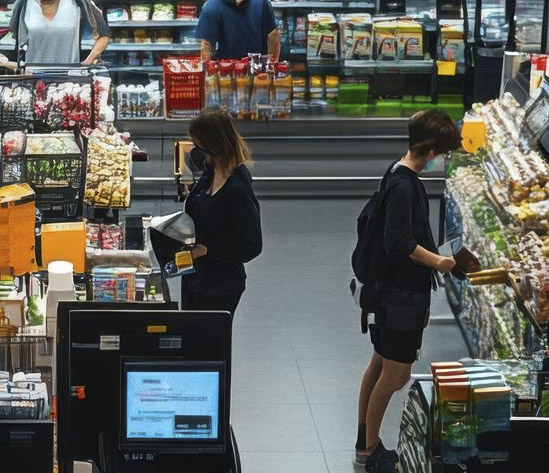
- The Grocery Store Trick: Place everyday staple items (like milk) at the very back, forcing customers to pass all your other merchandise to reach them.
Expert Advice: Deploy clear navigation signs to point shoppers toward your best-sellers, clearance sections, or monthly specials.

Visual Merchandising for Better Store Performance
Merchandising for Maximum Impact
Drive revenue and build an unforgettable retail journey by implementing these visual and customer-centric strategies.
Curating Eye-Catching Displays
The objective of any product display is to captivate and delight your shoppers. Use these foundational design rules to make your merchandise pop:
- The Power of Three: Group your products in asymmetrical trios (for example: one short, one medium, and one tall item). The human brain is naturally drawn to asymmetry, which forces the shopper to pause and process each item rather than glancing past a boring, uniform shelf.
- The Pyramid Principle: Crown your display with a single focal point at the very top, and cascade the remaining items downward in a triangle shape. It naturally guides the shopper’s eye from the peak right down to the base.
- Keep It Fresh: Rotate your product showcases regularly so repeat visitors always discover something new. Moving things around also allows you to test what drives the highest sales per square foot!
The Fitting Room Experience
If you sell apparel, remember this golden rule: the actual purchase decision happens in the dressing room. Your fitting areas must be welcoming, highly functional, and comfortable.
- Give Them Breathing Room: Ensure the footprint is generous. Customers shouldn’t feel boxed in, and the space should easily accommodate a parent with a stroller.
- The “Yes, No, Maybe” Hooks: Install plenty of wall hooks so shoppers can visually organize their garments into different piles.
- Thoughtful Furnishings: Include a small shelf for personal items (like phones and sunglasses) and a sturdy bench or chair so they can sit down or rest their clothing.
- Flattering Elements: Equip every room with pristine lighting and a high-quality, full-length mirror.
- Maintain the Magic: Treat this space with the same design respect as your main floor. Keep it impeccably clean and beautifully decorated.
- Companion Seating: Place comfortable lounge chairs right outside the fitting area for waiting friends and partners.
Prioritizing Customer Comfort
A comfortable shopper is a spending shopper. Small gestures of hospitality can directly increase your sales.
- Provide Resting Spots: Place benches or chairs strategically around the store for tired companions. Keep the seating facing your merchandise so it stays top-of-mind!
- Free Their Hands: Offer to hold heavy coats or previous purchases behind the counter so they can browse freely. Alternatively, provide stylish shopping baskets. If a customer’s arms are full, their shopping trip is over.
- Scatter Your Mirrors: Don’t limit mirrors to the fitting rooms. Place floor-length mirrors throughout the accessories, hats, and shoe departments so shoppers can quickly check out a complete look on the fly.
- Refreshments: Offering a complimentary small bottle of water is an inexpensive way to elevate the customer experience.
Smart Loss Prevention
Protecting your inventory is critical. Implement security measures that suit your store’s size and budget without making honest shoppers feel uncomfortable.
- Proactive Hospitality: The best defense is great customer service. Greet every single person who enters and ask if they need help. Train your team to be vigilant and aware of blind spots while remaining incredibly friendly.
- Strategic Layouts: Keep your central floor displays relatively low to maintain clear sightlines across the shop. Ensure temporary promotional signs aren’t creating hiding spots. Place small, easily pocketed items in high-traffic areas near the register.
- Reflective Deterrents: Mirrors are incredible security tools – people inherently behave better when they can see themselves! Blend standard decorative wall mirrors with convex security lenses.
- EAS (Electronic Article Surveillance): Invest in security tags or stickers that trigger a door alarm if not deactivated by your cashiers.
- Surveillance & Personnel: Consider installing a modern video camera system (even the visible presence of cameras is a deterrent). For high-traffic seasons like the holidays, hiring a physical security guard can provide extra peace of mind.
- Inventory Software: Utilize robust Point of Sale (POS) software to tightly track your stock and deter internal shrinkage.
Expert Advice: Think outside the box for display props! Hunt for affordable, quirky items like vintage chairs, upcycled picture frames, or unique planters at yard sales or craft stores. These unconventional elements take up minimal room but add massive character to your aesthetic.
Retail Marketing That Brings Customers Back
Marketing for Retail Success
Drive revenue and build an unforgettable retail journey by implementing these visual and customer-centric strategies.
- Build a dedicated customer database. Make it a habit to collect contact information at checkout. This allows you to seamlessly notify your audience about seasonal promotions, exclusive sales, or exciting new inventory.
- Leverage purchase histories. Use your point-of-sale system to track what individual customers buy. This data is a goldmine – it lets you send highly targeted alerts to specific shoppers when items they love are back in stock or when a complementary collection launches.
- Combine digital and physical outreach. Capture both email addresses and physical mailing addresses. While email is incredibly cost-effective, a beautifully designed postcard mailed directly to their home cuts through the digital noise and commands real attention.
- Host engaging in-store experiences. Turn your store into a community destination by hosting special events. Whether it is an after-hours VIP styling session, a holiday wish-list preview, an educational workshop, or a local school fundraiser, events create a buzz and give people a reason to visit beyond just shopping.
- Get active in the neighborhood. Join your local Chamber of Commerce or small business coalition. Participating in street fairs and local initiatives drastically boosts your brand’s grassroots exposure.
- Sponsor community organizations. Funding a youth sports team or a local theater production is a fantastic way to generate local goodwill and get your logo in front of neighborhood families.
- Utilize grassroots advertising. Don’t overlook the impact of taking out targeted ads in small community newspapers, high school yearbooks, or regional event programs.
- Always include a clear “Call to Action.” Whether it is an email, a printed flyer, or a social media post, tell the customer exactly what to do next (e.g., “Bring this ad in for 15% off”). This drives immediate action and allows you to accurately measure the success of your marketing efforts.
Assessing the Retail Experience
Debrief & Action Items
After your walk-through (or your trusted peer’s walk-through), thoroughly evaluate your notes across these key categories:
- Curb appeal, exterior signage, and window displays.
- Aisle spacing, navigational ease, and floor plan flow.
- Inventory levels, logical product groupings, and shelf organization.
- The effectiveness of feature displays and sightlines across the room.
- General hospitality and customer comfort zones.
- The transaction efficiency and appearance of the checkout counter.
- The holistic aesthetic mood and sensory experience (lighting/music).
- Your Action Plan: What is the most critical item you need to fix right now?
The Self-Audit Exercise
Follow these exact steps to gain an objective perspective of your own business:
- Hit the Reset Button. Step completely out of your store and walk around the block for five minutes. You need to clear your head so you can re-enter not as a manager, but as an unbiased consumer.
- The Threshold Test. Open the front door, take two steps inside, and stop. Make immediate notes on your gut reaction to the sights, sounds, and overall atmosphere.
- The Natural Wander. Begin moving through the aisles organically. Where does your eye naturally go? Do the merchandising adjacencies make logical sense? Jot down your emotional and visual responses as you explore.
- Evaluate the Cash Wrap. After browsing for several minutes, approach the checkout counter. Take a critical look at the tidiness and functionality of this final touchpoint. Document your thoughts.
- The Exit Strategy. Walk back toward the entrance using the most obvious path. Scan your surroundings – did you spot any dead zones or brilliant displays you missed on the way in?
- The Final Verdict. Step outside, close the door behind you, and immediately write down the single word that best defines the experience you just had.
Routine Store Assessments
Retail environments are living spaces. To maintain a competitive edge, it is vital to routinely step out of your “owner” mindset and evaluate your shop exactly as a first-time buyer would.
You can accomplish this objective in three distinct ways:
- Conduct a rigorous self-audit of your own space.
- Invite trusted friends, family, or staff members to perform a walk-through and provide unfiltered feedback.
- Actively observe real customer behavior during peak shopping hours.
The Art of Customer Observation
The floor never lies. Watch exactly how patrons interact with your environment to uncover hidden friction points:
- Notice their body language the moment they cross the threshold.
- Identify the very first display that successfully stops their momentum.
- Track their subsequent path – do they follow your intended flow?
- Note which zones, tables, or product categories repeatedly draw a crowd.
- Spot the “dead zones” that customers actively ignore or bypass.
- Assess their navigation – do they move confidently, or do they look lost and frustrated?
Finalizing Your Store Setup
Bringing Your Vision to Life: The Master Checklist

To ensure nothing falls through the cracks during your build-out, we have categorized the essential products and supplies you will need. Use this inventory guide to finalize your procurement strategy:
Core Fixtures & Displays
✅Wall Systems (Slatwall, Gridwall, & Outriggers)
✅Freestanding Apparel Racks (2-Way, 4-Way, & Rounders)
✅Heavy-Duty Gondola Runs
✅Premium Glass Showcases & Cash Wraps
✅Boutique Display Tables & Nesting Units
✅Acrylic Cubes & Countertop Merchandisers
✅Secure Stockroom Storage Shelving
Visual Merchandising & Operations
✅Mannequins & Tailored Dress Forms
✅Garment Hangers & Sizing Markers
✅Floor, Wall, & Security Mirrors
✅Shopping Baskets & Customer Carts
✅Professional Garment Steamers
✅Navigational & Promotional Signage
✅Hardware, Faceouts, & Waterfall Hooks
Custom & Specialized Elements
✅Brand-Matched Custom Millwork
✅Tailored Woodcraft Displays
✅Specialized Jewelry Accessories
✅Modified Fixture Dimensions
Partner with Us Today
Drive revenue and build an unforgettable retail journey by implementing these visual and customer-centric strategies.
Our seasoned team is ready to bring your retail vision to life. From browsing our extensive catalog to collaborating on fully custom designs, we provide the personalized support that massive, automated suppliers simply cannot match.
The Store Fixtures & Displays Guarantee:
We are fiercely passionate about retail success. When you partner with us, you are guaranteed:
- Unbeatable Value: We leverage our global sourcing network to match or beat online-only pricing without sacrificing quality.
- Expert Human Support: You get a dedicated project partner with decades of real-world merchandising experience.
- Transparent, Custom Logistics: No automated, inflated shipping calculators. We pull competitive freight quotes manually and offer premium White-Glove Delivery across the South East.
- Reliable Fulfillment: We proudly maintain swift 3 to 5 business day lead times for our standard inventory.
- Sensible 30-Day Returns: A straightforward, no-hassle return policy for unused, original-packaging items.
We measure our success entirely by yours. Let’s build an incredible store together.
Designing a New Boutique?
Do not settle for “close enough.” Tell us about your brand’s style and your budget, and we will put together a curated list of fixtures that bring your vision to life.